Showing posts with label sf. Show all posts

Saturday, April 4, 2015

The Interrogation of Ashala Wolf and Station Eleven

Well, what do you know; while I've been busy elsewhere, Blogger has reinvented that who-you-follow part of its back end, which was one of the reasons I started posting about books here. Once the RSS feed-thingy went away, I didn't have so much of a sense that I was contributing to a community, or any easy way to read what other people were blogging about.

I spent nearly all of this week in bed, and while I was too busy sneezing and trying to clear my head enough to breathe most of the time, I did a little reading. And, because I need to keep myself awake for a few more hours in the middle of an ambitious sleep-shifting back to "normal" hours while not overtaxing my blurry brain, I'll tell you about some of it, though I confess I didn't absorb as much as I normally would have.

One of the books I read: The Interrogation of Ashala Wolf by


Friday, December 13, 2013

The Different Girl by Gordon Dahlquist


The Different Girl by Gordon Dahlquist (Penguin - Dutton Juvenile) is one of the most interesting—and frustrating—books I read this year. Veronika is a girl; she lives on the island with her three sisters and Irene and Robbert. The girls’ parents died in a plane crash, and now, every day, they learn about learning…in a way that will tweak the brains of philosophers. They are observed, and they obey, and they struggle with a new idea: you must obey, but you must also decide.

When May washes up on the shore, after a storm that disrupts the supply boat schedule, the girls must unravel this mystery: who is the different one? Or are they not different, any of them?

The Different Girl draws from classic SF in a way that many YA books don’t in that it brings science and technology to the forefront, and it doesn’t wrap things up neatly, which is both a feature and a bug.

What makes this book tick:
   

  1. Really, really trusts the reader. 
  2.  Philosophical questions are embedded here; a good book for that reader who still asks "Why?"
  3. An open ending (perhaps it’s a series; I prefer this as a standalone) that leaves room for discussion and imagination.
  4.  Asks: what does it mean to be human? What does it mean to be different, and how is that constructed?

Thursday, December 5, 2013

When We Wake by Karen Healey

When We Wake by Karen Healey (Little, Brown - Books for Young Readers) starts off in the not-so distant future--and in Melbourne, one of my very favorite cities. Tegan is your average teenager (without that awful "normal" boringness that sometimes pops up before stories take off). She's going to a protest with her friends, and she's in her first breath of love, and she's got a lot of life left to live. The next thing she remembers is waking up...a hundred years later. It's not as simple as taking the next breath; Tegan has to decide what to do in the world she has to inhabit.

What makes this book tick:
1. Dystopian elements extrapolated from modern-day Australian and other politics
2. Science and psychology
3. Rebellion!
4. Inventive story frame

Monday, December 2, 2013

All Our Yesterdays by Cristin Terrill

All Our Yesterdays by Cristin Terrill (Disney - Hyperion) wasn't in my most-urgent reading pile for the Cybils. The cover, while nicely done, fits the mold of a dozen other orange-blue "adventures" I've seen lately. But I thought I'd share this as an example of how all nominated books are being viewed and reviewed by the first round judges--it's great to open to the first pages and be surprised! After a bit of a mysterious start, the action is non-stop.

Em is imprisoned. What she knows is that she dreads the drain, and that Finn, on the other side of the vent, is her whole world, the only person she can talk to. Then, one day, she steals a spoon and opens the drain, and finds a letter, to her--from her. And there's one instruction: kill him.

What makes this book tick:

1. Time travel!
2. Nonlinear storytelling.
3. Questions about fate versus free will.

Monday, October 21, 2013

The Summer Prince by Alaya Dawn Johnson

The Summer Prince by Alaya Dawn Johnson (Scholastic - Arthur A. Levine) marks the first of my 2013 Cybils (short, spoiler-free) reviews. I've been saving up this review because, well, this is a hard book to put into a review without spoiling it, even just as an opening summary.

In a far, far future Brazil, in Palmares Tres, a sort-of enclosed city ruled with a heavy hand by its matriarchy, June is caught up in the cycle of the Summer Prince, the selection of men and boys who are political and social sacrifices. Enki wins over June and her best friend, Gil--and inspires June to greater artistic heights than ever before.

What makes this book tick:
  • Complete teenage rawness--the idea of being abuzz with hormones and life, and perhaps never closer to foolish death
  • The compelling, contradictory desire to both be seen and to be invisible
  • The need to make some sort of mark on the world and to prove oneself
  • Tension between generations
  • Flawed characters who keep moving through space
  • The intersection of art and technology, especially once it's out in the world for consumption
  • On the literary side of SF--no hand-holding on the worldbuilding or when the plot changes streams
  • Explorations of class within an imagined culture
  • Politics and being socially aware

Wednesday, December 19, 2012

A Last Round of Cybils Panic

The end of the year is upon us, the Cybils are winding down, and I'm turning pages as fast as I can. I just found a few minutes to schedule one last post blurbing a sample of the fantastic nominations in YA SF/F for 2012.


Vessel by Sarah Beth Durst (Simon and Schuster - Margaret K. McElderry) was a nice surprise, especially since her books haven't quite clicked with me in the past. Normally I wouldn't mention that, but I think it's a good thing to share--the idea that you might not be in love with this book, but you open every book hoping that that one will be the one. In this one, Liyana is ready to die so that her tribe's goddess will come into her and bring prosperity. She is prepared, practiced, and ready for the ceremonial dance--but her goddess never comes. She's cast out, because her people would never believe her goddess just couldn't get there to take over her human vessel, and Liyana has to decide how to reconcile her wish to live with her wish to serve her people.

In The Hunt by Andrew Fukuda (St. Martin's Griffin), Gene is alive. He doesn't hang from the ceiling. He doesn't stay up all night. He doesn't die in the sun. See where I'm going with this? Gene wins a dubious lottery: a chance to hunt down some real, live humans. Mmm. With some of his peers. Can he hide his true self and survive in this dangerous game?


Ismae is a handmaiden of death in Grave Mercy by R.L. LaFevers (Houghton Mifflin Harcourt). She's impervious to poison, she can see who St. Mortain has marked for death, and she's a fantastic assassin, which leads to an assignment filled with court intrigue, secret identities, political maneuvering, and the choice between kissing and killing.


The Kairos Mechanism by Kate Milford (The Clockwork Foundry) has an interesting story outside of the story; it was a Kickstarter project by the author, and bridges the gap between The Boneshaker and The Broken Lands. Only a few hard copies were printed, and I think you should consider getting your hands on one if you can. Natalie Minks notices two boys coming from--well, nowhere, if you pay attention to where the roads go, and they're carrying the corpse of a man who either died yesterday or fifty years ago. Natalie could let it go, but she's not that kind of girl.


And so, then, you probably want to know about The Broken Lands, also by Kate Milford (Houghton Mifflin Harcourt - Clarion). In 1870s Brooklyn, when the under-construction Brooklyn bridge looms over a grittier, but no less vibrant NYC, a card sharp and a fireworks expert have to battle the forces of evil. Real history is braided masterfully with the supernatural in this book.


 All of these books are nominated in the YA SF/F category for the 2012 Cybils awards. These reviews are based on copies provided by their respective publishers, except for Grave Mercy, as I owned a copy.


Tuesday, December 18, 2012

Still More Cybils Panic

Can I mention all of the books I've read? All of the books I really liked this season? No, but I can blurb a few more...

Insignia by S.J. Kincaid  (Harper Collins - Katherine Tegen Books) is fast-paced military SF for fans of Ender's Game and Brain Jack. Tom is nobody, really, and neither is his no-good gambler of a dad. However, Tom is pretty good at video games, and at bluffing, which gets him a spot on an elite team of teenagers whose brains are, let's say, wired. In a future where countries fight for corporations, Tom has to fight the forces of evil that come with an executive washroom and an expense account, but he also has to figure out what's left when your brain is no longer your own.


Ashen Winter  by Mike Mullin (Tanglewood) is just as personally frightening as Ashfall was for me. Sure, it's been a while since Yellowstone blew up, covering the rest of the country with ash and sending temperatures dropping. Sure, we could just keep eating kale, one of the few things that will grow. But Alex's parents are still out there, looking for him, and he can't just wait for them to come home.


When I picked up The Infects by Sean Beaudoin (Candlewick), I knew I'd be in for a ride. See, I don't always know exactly what is going on in Beudoin's books. They're so weird. But I am so glad they're out there. In The Infects, a kid is on his way to camp for juvenile delinquents. And then there are zombies. And it's weird, okay? If you like things a little absurd, The Infects is one to pick up.


In What's Left of Me by Kat Zhang (HarperCollins), the souls of sisters Addie and Eve share one body. Children start out as hybrids, and eventually, one of the souls slips away. It's part of growing up--and it's part of being a good, non-criminal person. Addie and Eve haven't settled, though, which makes them suspicious, different, and ill. When Addie and Eve are sent away to get better, the fight for both of their lives gets dire. This makes an interesting contrast to Every Day, by the way.


Shadowfell by Juliet Marillier (Knopf) completely charmed me. Neryn's not supposed to be magical; it's prohibited. She can see the fairies, though, and that means she has to run. To be straightforward: I've read so many books-with-fairies in the past five or so years that few stand out, but Neryn's journey had something Frodo-esque and pure about it. And there were some very clever moments that stole my heart. If you've read this one: Go small!


All of these books are nominated in the YA SF/F category for the 2012 Cybils awards. These reviews are based on copies provided by their respective publishers, either through the Cybils program or when I requested them from NetGalley and completely forgot to read them earlier in the year. So it goes.


Sunday, December 16, 2012

Yet More Cybils Panic

Another roundup of books I'd like to review more carefully for you--but which I simply can't if I'm to attempt to finish looking at as many of the 205 YA SF/F nominees as I can...

This gets tough to do; as soon as I'm through with one book, I'm on to another, and even when I'm ruminating on a book, a few days' distance makes it hard to put together a few lines. I hope this gives you a few hints and inspires you to go looking for yourself!


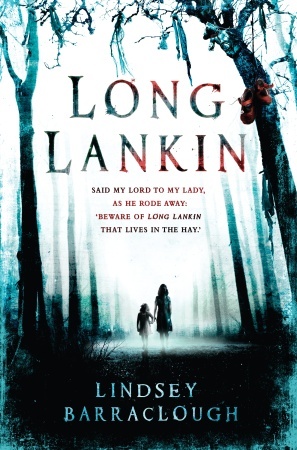
Long Lankin by Lindsey Barraclough (Bodley Head) is a book that sort of defies its category. "Beware of Long Lankin, who lives in the moss..." That might fit nicely with the last line of Rock-a-bye Baby, but Long Lankin is a much scarier ending than just falling out of the sky. Two girls are sent to live with their great-aunt in the late 1950s. The house where they live, moldering, old, is being swallowed by the sea and by sorrow. Great-aunt Ida wants Cora and Mimi gone, but something much more sinister might get them all first. I'm not entirely sure how to conceive of the children's viewpoints (I couldn't figure out if Cora was an old-school, mature 12, or, say, 14), and the great-aunt receives sections from her point of view as well. Long Lankin is lovingly written, and has something scary for everyone, but it might take a mature reader to unravel the time/place. I definitely think that an older teen who loooooves scary movies will find something here; I spent one long night awake after a certain scene!

I love the cover of The Assassin's Curse by Cassandra Rose Clarke  (Strange Chemistry). The detail, the paper-cut feel, and the swirly font all hint at the story of Ananna, a girl whose world might have been a parallel universe to any bit of the Arabian Nights. Ananna's parents, pirates (quite respectable ones), have plans to marry her off, but Ananna is having none of it. She makes a daring escape on a camel and carries on: there's no going back. It's not easy to be a young girl, on her own, with no tools or funds at your disposal, but things are really not easy when there are assassins involved.


The Freedom Maze by Delia Sherman (Small Beer Press - Big Mouth House) is another that defies category (the Cybils divides only into contemporary and SF/F in YA and MG, so anything with an odd happening is usually SF/F; though this is largely, closely focused on non-magical history, there are a few otherworldly, time-travel-y bits, and that's why this is here). In this carefully researched story, Sophie slips back in time from 1960 to 1860 on her family's land. In 1860, she's taken for a slave, but don't think this is a story of a girl who solves all the woes of the past. She's part of others solving for themselves, and part of something bigger, and more thoughtful, regarding class, race, and power.

Daylight Saving by Edward Hogan (Walker) starts with a boy, Daniel, who's not very pleased to be spending the summer at Leisure World with his dad. His dad is a drunk. Daniel's also not so great, by his own judgment, and then there's a boring summer of boring sport(s) to look forward to. And then there's a girl that only he can see... Covers don't have much to do with insides, but I thought that this cover was really, really interesting. I don't know that it expands on the title, so much, but it's simple, iconic, and memorable.


When the Sea is Rising Red by Cat Hellisen (Farrar, Straus, and Giroux - Books for Young Readers) is another with a very striking cover, and one with a creepy, evocative title. Felicita lives as one of the privileged few in Pelimburg, though it's quickly clear that privilege does not come with freedom; her best friend kills herself to escape an arranged marriage, and soon, Felicita has escaped to the slums. Her friend's death has called forth a strange magic that might or might not be the best thing for everyone, and Felicita has to decide where to fight...


All of these books are nominated in the YA SF/F category for the 2012 Cybils awards. These reviews are based on copies provided by their respective publishers.

Monday, December 3, 2012

UnWholly by Neal Shusterman

If you read Unwind, you might've thought that was enough. It was open-ended, but, somehow, closed. If you're like me, you have a complicated relationship with series, especially unfinished series. So, when I heard UnWholly by Neal Shusterman (Simon and Schuster - Books for Young Readers) was out, I didn't go right for it. Unwind--no pun intended--took me apart.

If you need a refresher--and I went into this reading without one--there's been a war, presented as being over abortion. It is proposed that peace come over an unreasonable, twisted compromise: no abortions, but children can be "storked," or forced upon other families, and once a child is thirteen, a child's guardians can reverse the child's life, essentially splitting the child and its consciousness into spare parts. Understandably, though some kids are tithed--born to be Unwound--others aren't so happy when they get the news that they're unwanted, due to circumstance or relationships, and scheduled to, in essence, die.

Unwind is about getting away from the first, horrific situation. UnWholly is about the after. What if you escaped? What if you were safe? What if your friends weren't? What do you owe for your freedom? And what if people aren't really on your side? What's the deepest, darkest place from which you can return?

That's vague, of course, but I wouldn't want to give anything away. UnWholly is as intriguing and complex as Unwind, and every bit as harrowing.

UnWholly is nominated in the YA SF/F category for the 2012 Cybils. I reviewed a copy provided by the publisher, with no explicit or implied strings.

Sunday, December 2, 2012

More Cybils Panic

When I've been a panelist in the past, a deluge of books (e- and print) has hit my doorstep in early November. This year, probably mostly due to Sandy, that deluge came last week. So, in the interest of giving everything a look, I will have to just give you blurbs. Ready?

Mothership by Martin Leicht and Isla Neal (Simon and Schuster - Books for Young Readers) reminds me, oddly of Libba Bray's Beauty Queens. It's also a very good read for those who enjoyed the nose-tweaking of Bumped and Thumped. At any rate, if the many teen fertility dystopians have gotten to you, you might try this one. Elvie is pregnant, so she'll be spending the next months in space at the Hanover School for Expecting Teen Mothers. You didn't think it was that simple, did you? Nope. It's all fun(ny) and games until the aliens show up. And the dad.


The Unnaturalists by Tiffany Trent (Simon and Schuster - Books for Young Readers) is the first in a series that's a little bit steampunk, a little bit, uh, museumpunk, let's call it, a little bit paranormal. Tesla, one of my favorite dudes ever, has opened up a portal between worlds to let the myths and legends in--only it seems like both our world and that can't co-exist.


Flesh and Bone by Jonathan Maberry (Simon and Schuster - Books for Young Readers) is the third in the series that started with Rot and Ruin and cataloged the adventures of one Benny Imura, who gets sucked out of his safe, gated compound in California and into the outside, where zombies roam. Just as much fun as the others, and just as many heart-stopping moments. Which is all well and good until something eats your brains.


The Blessed by Tonya Hurley (Simon and Schuster - Books for Young Readers) is a quirky little...okay, big book. Several girls who tried to commit suicide end up in the same emergency room, and several girls get caught up in a world of martyrs and saints. The quirky thing, however, is that it reads like Heathers and Mean Girls came out to play. Also, check out the fancy reversible cover on the hardback edition.


Shadows on the Moon by


Friday, November 9, 2012

Adaptation by Malinda Lo

So, I thought this book was awesome. In Adaptation by Malinda Lo  (Little, Brown Books for Young Readers), Reese and David are on the way back from a disastrous debate competition, and it turns out that they're not getting out at the airport. No one is: a series of bird strikes has crashed dozens of airplanes, and everyone is grounded. They hit the road with their debate coach, planning to road trip from Phoenix back to San Francisco, but before they get home, terrible, frightening things start to happen, including a car crash for Reese and David. They wake up in the hospital--the kind of hospital that makes you sign a non-disclosure agreement before you leave. Why? Routine, of course, until you start to feel like your body is not your own and men in black suits show up at your door.

I really liked Reese. She's smart and analytical, and she's self-sufficient. She's discovering some things about her sexuality, and--in contrast to a fair number of other books I've read lately--there's no pressure for her to pick out a permanent label, like, today. I liked David, too; he's just not in quite as much of the book.

If Huntress and Ash are watercolors, the style in Adaptation is all sharp edges and overexposed photos. Malinda Lo's journalism background is put to good use here in a handful of articles and reports that feel like, well, an accurate portrayal of uncertain and opportunistic media.

Adaptation gets recommended as "for X-Files fans." I'm not necessarily an X-Files fan, but I definitely enjoyed Adaptation for its otherworldly science, the government conspiracies, and for how, midway through, it starts being hard to figure out whom to trust. Annoyance: I can't go straight on to the sequel.

This book is nominated in the YA SF/F category for the 2012 Cybils. I reviewed a copy that I owned.

Monday, November 5, 2012

Every Day by David Levithan

Every Day by David Levithan (Random House - Knopf) is one of those books that might confuse genre readers. To me--to someone who's read old, classic sci-fi in periodicals on newsprint--it feels like it belongs. But since it also feels contemporary, in that way that can't quite be put into words, it's a great read for those who refuse to read one or the other.

In the middle of the night, the jump happens. Think Quantum Leap. In the morning, every morning, A is in a new body, trying to get by with a new family, attending a new school, accessing a new person's memories in order to blend in. A knows better than to get too  attached, but one day, there's Rhiannon, and she makes A want to do whatever it takes to visit her, over and over, no matter the risk to the body A is in. The problem is, while A sees Rhiannon the same way each day, Rhiannon doesn't see A the same. Body or soul?

If you could only love one--

Two interesting bits for me: first, perhaps because of the first body A is in, I felt that I was hearing a male narrator the whole time. That's not quite A as a character--A isn't gendered. The second interesting bit was a B plot involving a boy that A jumped into and who tracks A down. Even though I love ambiguous, brave endings, and Every Day has an ambiguous, brave ending, I wished for a little more clarity in the B plot at the end of the book.

Overall, though, the questions of body and attraction give the book enough of a hook in for fantasy/SF fans and those readers who identify otherwise, and I suspect it would spark a lot of intense discussion in book groups. I haven't stopped thinking about Every Day since I finished it.

This book is nominated in the YA SF/F category for the 2012 Cybils. I reviewed a copy that I owned.

Tuesday, October 23, 2012

For Darkness Shows the Stars by Diana Peterfreund

Please don't fret about the sparkly, pale girl on the cover. I know you've seen a lot of them lately. I don't think this looks much like the book's heroine as described.

And if I tell you this is a post-apocalyptic tale, please don't fret about that either. This apocalypse happened a long, long time ago.

In that long, long time ago in For Darkness Shows the Stars by Diana Peterfreund (HarperCollins - Balzer+Bray), genetic engineering got out of hand. People were modified. And somehow, things mutated and changed, as they do, and people were Reduced. A few, the Luddites, rejected the technology and hid themselves away, and later took it upon themselves to protect the Reduced, the people who could then only speak a few words, pantomime a few rudimentary signs, hardly take care of themselves. In the past few generations, there is something new: the children of the Reduced are as aware of the world and intelligent as the Luddites. And now, they want a new life.

Elliot is the youngest daughter living on the North estate, and her childhood friends were a Reduced girl, Ro, and Kai, who is definitely not Reduced, but one of the Children of the Reduced, who call themselves Post-Reductionist. Each orbits a different class sphere, but the three are fast friends until the day when Kai leaves to join an enclave of free people, and Elliot...doesn't. She couldn't; no one else in her family cares enough about the people of the estate, or the running of the land, to ensure that there is enough for everyone. And Elliot, the one who stayed behind and broke her own heart, must struggle with what she knows as a Luddite--science and innovation tore the world apart--and what she knows as a person, that her own inventions could help everyone.

I had forgotten that this is a retelling of Persuasion, but I recognized the bones of so many favorite romances--girl's family is messing up the finances, girl is in odd position of trying to save the farm despite everything, girl has to negotiate class boundaries. But even if you haven't read Persuasion, and I'm not entirely certain I have (Austen mostly blurs together in my head), there's really fantastic worldbuilding, including some truly frightening implications about a world where very few have autonomy over themselves due to intellect. The last bit makes for rough reading at times, but despite some uncomfortable moments, I couldn't put the book down.

This book is nominated in the YA SF/F category for the 2012 Cybils. I had my own copy to read and review.

Monday, September 17, 2012

The Chaos by Nalo Hopkinson

The Chaos by Nalo Hopkinson  (Simon & Schuster - Margaret K. McElderry) might not be on your radar; I haven't seen much talk about it, and only a few reviews, which have tended to be mixed. Maybe that shouldn't surprise me so much; it's very different from what's on the YA SF/F shelves right now. It's possible that I missed the buzz, of course, but either way, I'd like to start some back up again.

In short summary, Scotch (a short form of Scotch Bonnet, nickname for Sojourner) has started feeling stable again. Her brother's out of jail, and they're going to get an apartment together as soon as they save up enough money to move out of their parents' house. She's on the dance team, and smokin' at it. She has two close friends, and doesn't have to go to the school where she was attacked and called a slut. She changes her clothes when she leaves the house--there's good-girl wear, and there's Scotch wear--but most teenagers lead a bit of a double life, don't they?

Scotch and her brother Rick go to a bar, where Rick is worried about his open mic appearance and Scotch can't get caught (at 17, she's two years too young to be in a bar in Toronto). And things get rapidly more worrisome when a giant blob eats Rick and a volcano appears in the middle of the lake...and the strange black marks on her body start to take over.

Scotch has the most authentic teenager voice I have read in ages. In the middle of reading the book, I told a friend that it reads like a contemporary; that's not a good enough shorthand for what I mean (and makes it look like I'm trying to make some sort of value judgment that I'm not). Scotch is just so present, so vibrantly of that liminal late-teens age. So waiting for her mind to catch up with her mouth. Working through being wrong, needing time to think, needing to figure out how to be right again, with herself and with other people. Working through trying to be this person that everyone else wants to claim, without allowing her to choose her path. The Chaos is surprisingly character-driven in a way that a lot of SF/F is not.

There's lots that unexpected here, even for genre enthusiasts. The Chaos doesn't bother to explain its Toronto setting for the reader, and rightly so. There's a sort of old-school, classic urban fantasy feel to the disruption, as if the weird is so weird it must be normal again; combined with the denial of mid-apocalypse, fear can feel a little distant for short stretches, but that's realistic--too much, and the characters would be paralyzed. The weirder things get, the more threads come in from surprising angles. There are duppies and a rolling calf, a bird I think is a phoenix, Baba Yaga and her house (seriously, Baba Yaga should be in everything, and I especially like this one), disembodied voices, Brer Rabbit, Anansi (and oh, the moment of Brer Nancy!). Around every corner is some new amazement. Alice is truly in Wonderland.

The Chaos touches on, or directly confronts, identity, racism, disabilities, sexuality, class, bullying, and more, all as part of the real and unreal landscape in which the characters move, stumble, and eventually negotiate, if sometimes imperfectly. There are some reviews that explain this better than I can here, here, and here.

In about 240 pages, Scotch undergoes a physical and personal transformation, becoming who she wanted to be all along. It's not so much about defeating the chaos or any particular big bad, but about remaking and repairing relationships with herself and others. I think that The Chaos makes a good read for fans of Kristen Cashore's Fire, Dia Reeves's Bleeding Violet, Alaya Dawn Johnson's Racing the Dark, and Justine Larbalestier's Liar, for a start--there's more than a little thread of "being the monster" here, and a certain horrific twist to the whole thing. 

This book is nominated in the YA SF/F category for the 2012 Cybils. I had my own copy to read and review. 

Wednesday, August 29, 2012

Jurassic Park by Michael Crichton

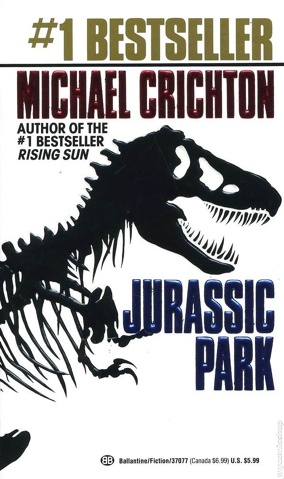
Jurassic Park by Michael Crichton (Random House - Ballantine) is a comfort (re-)read for me. Of late, I’ve been tackling more challenging reads and trying to cut down on my “I think I won’t like these” to-read stacks, so I took a break with some dinosaurs.

I saw the movie of Jurassic Park before I ever read the book, and I saw it when I hadn’t been to a movie in several years. The experience was, as you can imagine, memorable: here are lifelike dinosaurs, wondrous and awful. And scary. They will roar you.

I am not afraid of monsters under the bed. I am afraid of dinosaurs under the bed. I heartily approve of their demise into fossils and petroleum products even as I get excited to fuel up at a Sinclair station. And I find that any Jurassic Park movie is a great companion for an afternoon on the treadmill (or, of late, this, to better avoid neck and back pulling issues).

And, I’m sorry to say, the movie—the first, at least—is better than the book.

I’m a big fan of this kind of adult sf, of stuff where we have to fight disease or figure out that wormhole or battle the problems of ancient creatures brought back to life. Terra Nova, canceled as it hit its stride, was right up my alley, as Revolution will be this fall (up my alley, that is; it's too early to predict demise). But even as I love, love, love the scientific details, the ideas about space and physics and biology, I recognize that the stories are sometimes lacking. I used to say that I liked the book and movie of Jurassic Park equally, as you’d like two very different siblings, but this last read, I had an editor brain turned on.

What’s not to love about Jurassic Park? Well, throughout the book are features that appear in many similar books and that are hard to balance. For example, there are a lot of characters in the book, and the movie does a good job of combining several people and cutting others down to cameos. (Not necessarily in the best of ways; in the book, Dr. Wu plays a much bigger role as a scientist who buys into the idea that he can simply keep making new versions of dinosaurs until he hits on the right one. In the movie, BD Wong  gets a few seconds of screentime to explain the use of amphibian DNA; we all know that Asian actors don’t get a lot of roles, so that sucks extra.) 

The biggest character changes are in the children and Dr. Grant. Lex is transformed from a whiny victim to a much older girl who’s still not fond of dinosaurs, but who helps save the day with her computer skills; Tim is younger, but doesn’t lose his dinosaur knowledge, and takes on some of the vulnerability that book-Lex is supposed to embody (but in the book, she is a character that could have been cut with no real loss to the story, unfortunately, except for gender balance). Dr. Alan Grant, a Hawaiian-shirted, cowboy boot-wearing, bearded dino guy, goes from being just the guy who knows all the stuff to the guy who’s experiencing the amazement of his life’s work come alive, to, in the film, the guy who grows through his reluctant relationships with kids Tim and Lex. 

Hammond, Arnold, Nedry, Muldoon, and Dr. Ellie Sattler each keep similar roles in the books and films, or similar amounts of importance, but I appreciate that they aged Ellie up so that she’s clearly Grant’s colleague and not just some hot TA. Mathematician Ian Malcom isn’t as much of a hotshot in the book as he is in the film, and interestingly enough for me, a lot of his dialogue made it straight into the film, with only a few changes, even though he’s the voice of explanation; strangely, his ranty monologues work in the film, but I might have to credit Jeff Goldblum for that. Genarro, the lawyer, lives much longer and has more to do in the book, shadowing Muldoon and representing arrogance in big business; his role as meal in the film is nothing more than a cheap lawyer joke, and Hammond acquires most of Genarro's traits, as well as more of a conscience.

All of this adds up, though: Jurassic Park the movie is streamlined. There are no extra people, events, or scenes. The implications of the science are not so much discussed as they are illustrated; we see the chaos theory in effect as things spiral out of control. Most importantly, the characters, almost all of them, grow and change in the film, whereas in the book, they pretty much stay the same, and the interest is in how they solve a problem like maiasauru.

In summary, this provides an exercise: Read, watch, figure out how to amp up conflict, streamline…and some books should be more like films.

And don’t move. They can’t see you if you don’t move.

Wednesday, August 15, 2012

Brown Girl in the Ring by Nalo Hopkinson

I avoided reading this book for a long time. Why? It made a song in my head. A music curriculum version, one in all those third and fourth grade textbooks. I didn't have YouTube then, so check this out instead:


Brown Girl in the Ring by Nalo Hopkinson (Warner Books--which I think is now owned by Hachette) is about Ti-Jeanne, who lives in a future, fallen Toronto, and bringing up Baby. She's left her boyfriend, Rudy, to move in with her grandmother, a woman who knows magic of nature and magic of spirits. It draws from Caribbean traditions, and deftly combines the unreal with the grittiness of the city. In the middle of it all, Ti-Jeanne has to fight evil within the confines of the city, and within the confines of her extended family. Chapters are organized with snippets of other work, like "Brown Girl in the Ring," which I only know as a children's game (and only kinda, but that's a long story about not understanding diagrams I had and only getting started on an interest in music/game traditions before I left teaching).

Even when I could figure out what was going to happen next, this book just kept punching me in the gut when the inevitable did happen. Hopkinson is really good at threading together SF and fantasy elements without losing the heart and without shying away from having characters ask tough questions. Redemption isn't easy. Love isn't easy. Forgiveness isn't easy. Societies, now and in speculative futures, don't play by the rules all of the time. I think a lot of budding authors would do well to spend some time living in books like this one and absorbing.

I think that this is a good introduction to Hopkinson's other work; she's got an impressive, thoughtful, and just plain excellent body of writing to dig into, too. (She's also a guest of honor at Sirens this year, and wow, are we fortunate to have her!)

Tuesday, June 19, 2012

The Girl with the Silver Eyes by Willo Davis Roberts

The Girl with the Silver Eyes (Simon & Schuster - Alladin, which I just read, but the version I owned as a kid was the Scholastic version, pictured right and I see that there was an Atheneum edition as well) was a book that I owned, and somewhere, in a dusty box in an attic far away, still do.

Katie can make things move. With her mind. It scares the people around her, and she doesn't have many friends. Her parents are divorced and she's been living with her grandmother--and some people suspect that she might have pushed her down the stairs to her death. So, when she goes to live with her mother in the city, and a strange man starts asking questions, Katie decides to track down the kids born to women her mother worked with at a laboratory. Maybe they're all...different.

I loved this book as...probably a kindergartener, but I reread it lots of times. I wished and wished for some special power to go along with being different, and it never appeared. Before there were Hogwarts letters, we still wanted them, I guess. My adult reread came with a sense of bemusement; I see why I liked this then, but now, I find the story kind of unsatisfying. Just when the special kids find each other, and just when they think they're in the worst trouble ever, they decide to go ask their parents what's going on. Not a bad strategy in real life, but not so adventurous in book form!

In my head, this book goes with No Flying in the House, Baby Island, Pippi Longstocking, and Cherry Ames--all books that might appeal at about the same time. And it makes me wish fervently that the library of my youth might reappear, just for an hour, so I could look through it and get the titles of all the books that I remember only a snippet of, and not enough to find them via a search. I can still tell you which shelves I'd want to tear apart--just not the authors I want to (re)read.

Monday, March 12, 2012

Airborn by Kenneth Oppel - A 2005 Read

In my lovely pile of book reviews that are hidden in an old cache, I just ran across this one for Airborn by Kenneth Oppel (HarperCollins-Eos) that I wrote in 2005. I've edited it a bit to take out the personal conversation that was embedded in it at the time. And, my apologies, but there may be an odd break around the picture when this posts. The disintegration with Amazon Associates has caused problems, and now, even when I'm just typing text, Blogger is showing inability-to-save errors. I'm bummed because Blogger is a) free, b) doesn't require me to have a hosting service, c) doesn't require me to keep up with WordPress, d) is very WYSIWYG, meaning that I can spend more time writing and less time coding, creating more time for reading, and e) it has nice basic stats, themes, and ways to connect with other blog(ger)s. Buuuut...I suppose I'll have to make time, eventually, to move again.
Anyway, Airborn was one of the best books I'd read in a while. I hadn't been inspired by the cover; the title looked clunky (as compared to, say, Airborne...but there's a reason why that wasn't the right word), the colors were the dark blues and reds I associated with Robin Cook or John Grisham or a medical/police/political thriller (I believe that there are more cover designs available now, and of course, it doesn't look odd at all to me today), and the airship on the cover resembled nothing so much as a shark. Once in, though, there was this wonderful sense of being in a turn-of-the centuryish Treasure Island/Swiss Family Robinson/Indiana Jones adventure.

The book tiptoes in the direction of magical realism but doesn't go there, exactly. In this parallel, giant airships and balloons rule the skies, sliding over the occasional ocean liner (such as the Titania) below. There's been no apparent need to invent or use airplanes, except for gliders as a sort of hobby. Of course, there's also a sense that this is taking place about 100 years ago in terms of fashion and convention.

Matt, a cabin boy sailing out of Sydney, receives the determined and impetuous Kate Simpkins for a passenger. She's accompanied by only a noisy, nosy chaperone, and wants to know what really happened to her grandfather and what were the mysterious creatures he saw in the sky. He also has to contend with Bruce, the aviation-school brat who came on board because of nepotism and usurped Matt's promotion. Oh yeah, and there are pirates, a storm and shipwreck, narrow escapes, a daring rescue, acrobatics in the air, and a hint of romance of the type that I always think of as the kind even boys who still think in cootie terms won't mind.

I loved this book as a standalone, and was unexcited about the sequels (huh, and I've been complaining about that a lot again recently). I liked the just-open-enough ending, and as it turns out, I haven't read all of the sequel(s?), though I own more books by this author, and they've survived more than one round of book-purging. I remember Airborn as a nifty historical speculative adventure, and would still recommend it.

Related Posts with Thumbnails